The color, broken down
Four ways to describe one color. Each slider in the game maps to one of these dimensions.
- HEX
#0281BF
- RGB
- 2, 129, 191
- HSB
- 200°, 99%, 75%
- HSL
- 200°, 98%, 38%
Nearby tones that look right and are wrong
#0267BF#0299BF#1988BF#007FBF#02689CHow this color came to be
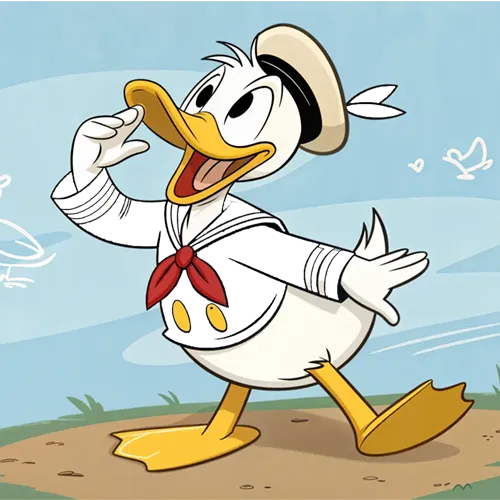
Donald Duck debuted in 1934 in the Silly Symphonies short The Wise Little Hen. He's worn the same blue sailor outfit ever since, with only minor revisions over the decades. The color was chosen during the early color-cel era to be instantly readable on screen, instantly identifiable as "Donald," and friendly to the limited color palettes of the period's animation production.
The hex resolves to HSB(200°, 99%, 75%). That's a blue with the hue squarely in cyan-blue territory, near-maximum saturation, and a brightness around three-quarters. The color is sometimes called "cerulean," but Donald's specific blue is slightly warmer than pure cerulean — closer to a clean royal blue with a hint of cyan added. It's a color that does not exist in nature (no animal or rock is quite this saturated), which is part of why it works on a cartoon duck.
Players who guess Donald wrong tend to undershoot saturation. The instinct is "blue, but not crazy blue" — and we land near 70% saturation. Donald lives at 99% saturation. The blue is engineered to be aggressive. If your blue feels a bit too punchy when you let go of the slider, you're probably close.
How to match it from memory
Calibrated to this character's specific hex, not generic color advice.
- Saturation: ~99% — push it almost all the way up.
- Brightness: ~75% — mid-high, not maxed.
- Hue: ~200° — pulled toward cyan from pure blue.
- Common mistake: not enough saturation; landing near 70%.