The color, broken down
Four ways to describe one color. Each slider in the game maps to one of these dimensions.
- HEX
#FEF200
- RGB
- 254, 242, 0
- HSB
- 57°, 100%, 100%
- HSL
- 57°, 100%, 50%
Nearby tones that look right and are wrong
#EAFF00#FFD000#FFF41F#FFF200#DBD000How this color came to be
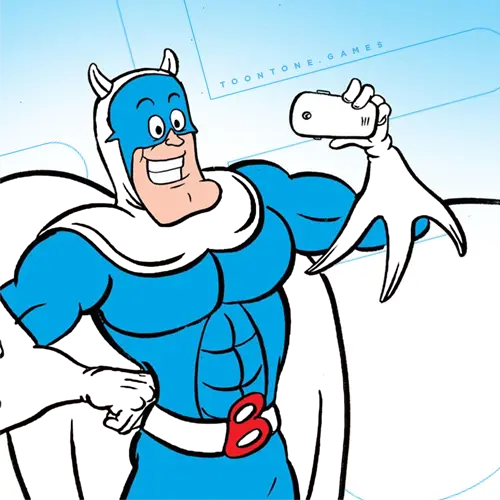
Bananaman is a British animated series from 1983, adapted from a comic strip that ran in Nutty and later The Dandy. The premise: an ordinary schoolboy named Eric Wimp eats a banana and transforms into a muscular superhero with a cape, mask, and unmistakable yellow costume head to toe. The voice work was by the trio behind The Goodies — Tim Brooke-Taylor, Bill Oddie, and Graeme Garden — and the show ran on BBC One through the mid-80s.
The hex breaks down to HSB(57°, 100%, 100%). Brightness and saturation are both maxed; the hue sits at 57°, exactly one degree cooler than SpongeBob's body at 56°. Functionally these are the same yellow — the brightest, loudest yellow a screen can produce. The cape was designed to read as banana, full stop: no ambiguity, no shading, no realism. It's the cartoon version of a banana color, not a real-banana color.
Players who guess Bananaman wrong fall into the same trap as SpongeBob players — undershooting both saturation and brightness because the human eye averages down maximum yellows in memory. The honest answer is "all the way up." Brightness to 100%. Saturation to 100%. Hue anywhere between 55° and 60° lands the round. If your guess feels uncomfortably loud, you're on the right side; if it feels like a calm yellow, you're not.
How to match it from memory
Calibrated to this character's specific hex, not generic color advice.
- Brightness: 100% — max it.
- Saturation: 100% — also max it.
- Hue: 55–60° — anywhere in cartoon-yellow territory works.
- Common mistake: undershooting both sliders — the same trap as SpongeBob.