The color, broken down
Four ways to describe one color. Each slider in the game maps to one of these dimensions.
- HEX
#89A7A9
- RGB
- 137, 167, 169
- HSB
- 184°, 19%, 66%
- HSL
- 184°, 16%, 60%
Nearby tones that look right and are wrong
#88A2A8#88A8A6#9DA8A8#74A5A8#6B8385How this color came to be
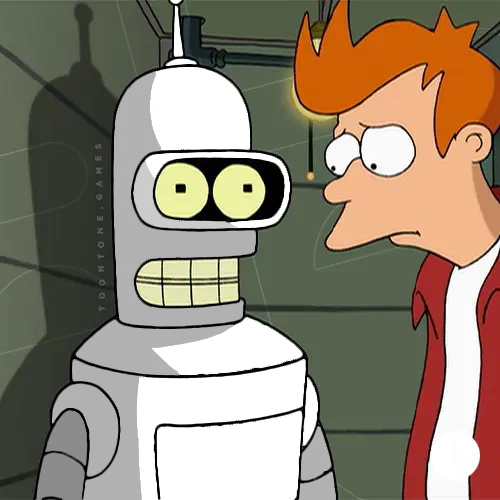
Bender — full name Bender Bending Rodriguez — is the chain-smoking, beer-fueled robot at the center of Futurama, which premiered on Fox in 1999. The show paints his body as a Bending Unit 22 chassis, and the metal color the animators settled on isn't a clean industrial gray. It's a gray with a small, deliberate lean toward teal — enough to read as "metallic" rather than as a flat neutral.
The hex resolves to HSB(184°, 19%, 66%). The hue sits at 184°, essentially right on the cyan boundary of the wheel; the saturation is only 19%, present but very quiet; and the brightness sits at 66%, confidently mid — not a light gray, not a dark gunmetal. Translated visually: this is a gray that has not given up its color, just dialed it almost out.
Players miss Bender's color in two opposite ways. The "robots are gray" crowd zeroes the saturation and lands on a true neutral gray, which scores low because the small color contribution disappears entirely. The "Bender looks bluish" crowd pushes saturation past 40% and chases a slate blue, overshooting the small amount of color the character actually carries. The honest answer is around 19% saturation — colored, but only barely.
How to match it from memory
Calibrated to this character's specific hex, not generic color advice.
- Saturation: ~19% — present but very quiet.
- Brightness: ~66% — confidently mid, not light or dark.
- Hue: ~184° — right on the cyan boundary; barely contributes at this saturation.
- Common mistake: dropping to true gray (sat = 0) or chasing a slate blue past 40% sat.