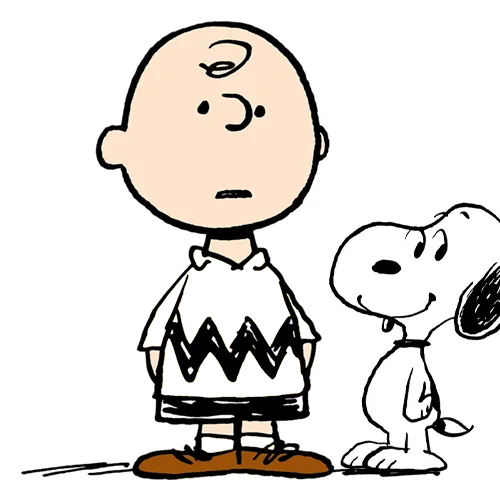
The color, broken down
Four ways to describe one color. Each slider in the game maps to one of these dimensions.
- HEX
#FFDA06
- RGB
- 255, 218, 6
- HSB
- 51°, 98%, 100%
- HSL
- 51°, 100%, 51%
Nearby tones that look right and are wrong
#FFFB05#FFB805#FFDE24#FFD900#DBBB04How this color came to be
Charlie Brown is the central character of Peanuts, the Charles M. Schulz comic strip that first ran in 1950 and continued for nearly half a century. His yellow shirt with the single black zigzag stripe became his visual shorthand over the decades, recognizable in television specials, merchandise, and feature films.
The hex resolves to HSB(51°, 98%, 100%). Brightness is at the absolute ceiling, saturation is one point short of maximum, and the hue sits at 51° — warmer than pure yellow (60°), close to a saturated golden yellow. Mathematically this color is pushed harder than almost any other yellow in the library; even Homer Simpson lives at 94% saturation, four points lower.
Players who guess wrong almost always undershoot saturation. The instinct on a "yellow shirt" is that it does not need to be cranked, because cranked yellow feels uncomfortably loud. Charlie Brown's shirt is exactly that loud. If your guess feels safe, you are underestimating the color. The honest answer is to push everything almost to the ceiling and trust the cartoon palette.
How to match it from memory
Calibrated to this character's specific hex, not generic color advice.
- Brightness: 100% — max it.
- Saturation: ~98% — push one step past where it feels safe.
- Hue: ~51° — warmer than pure yellow (60°).
- Common mistake: undershooting saturation; landing in the high 80s.